সংখ্য চকর গদা পদ্য
sanko chakro goda poddo. A conch shell, the Vishnu chakra, the mighty Indian Mace and the pious lotus , that is how my Grand mother would explain this flower everyday as we walked back from school.
Reading into history, one finds that the flower seems to have gather a lot of folklore and mystic charms across cultures, religions and continents. Weather or not the claims of the flower's magical powers to bring peace to troubles in the home as well as to attract friends and popularity, be true or not it definitely has attracted a lot of stories woven around the sweet fragrance & elaborate form.
It is also called the Kaurav - Pandav flower in many parts of India, named after the hundred Kauravas & five Pandavs from the mythological pages of the Mahabharata, not miss with Draupadi at the center. Some consider it the war scene with the mighty Krishna (probably associated due to the blue colour of hi aura and hence called Krishna Kamala in many sourthern regions) at the center guiding the five pandavas against hundreds of the opposing kauravas.
Oh also Passionflower is the official wildflower of Tennessee.
The Christian signify it with the crucifixion of Christ. The ten petals and sepals, to the Spanish, represented ten disciples present at the crucifixion. The three stigma represented three nails on the cross, the five anthers the five wounds of Christ. The many fringes represented the crown of thorns in the passion story. Bosio counted 72 fringes or filaments, which according to tradition, writes Vanderplank, is the number of thorns in the crown of thorns. Interpretations vary in literature. The passion flower, he writes, was a witness at the crucifixion.
The Passion Plant that grows in North America is called Maypops. If you step on the fruit which is the size of a golf ball, it would make a loud popping sound, therefore the name.
Outside the Christian heartland, the elaborate flowers have reminded people of the face of a clock. In Israel they are known as clock-flower and so in Greece as. In Japan too, they are known as tokeisō aka the clock plant
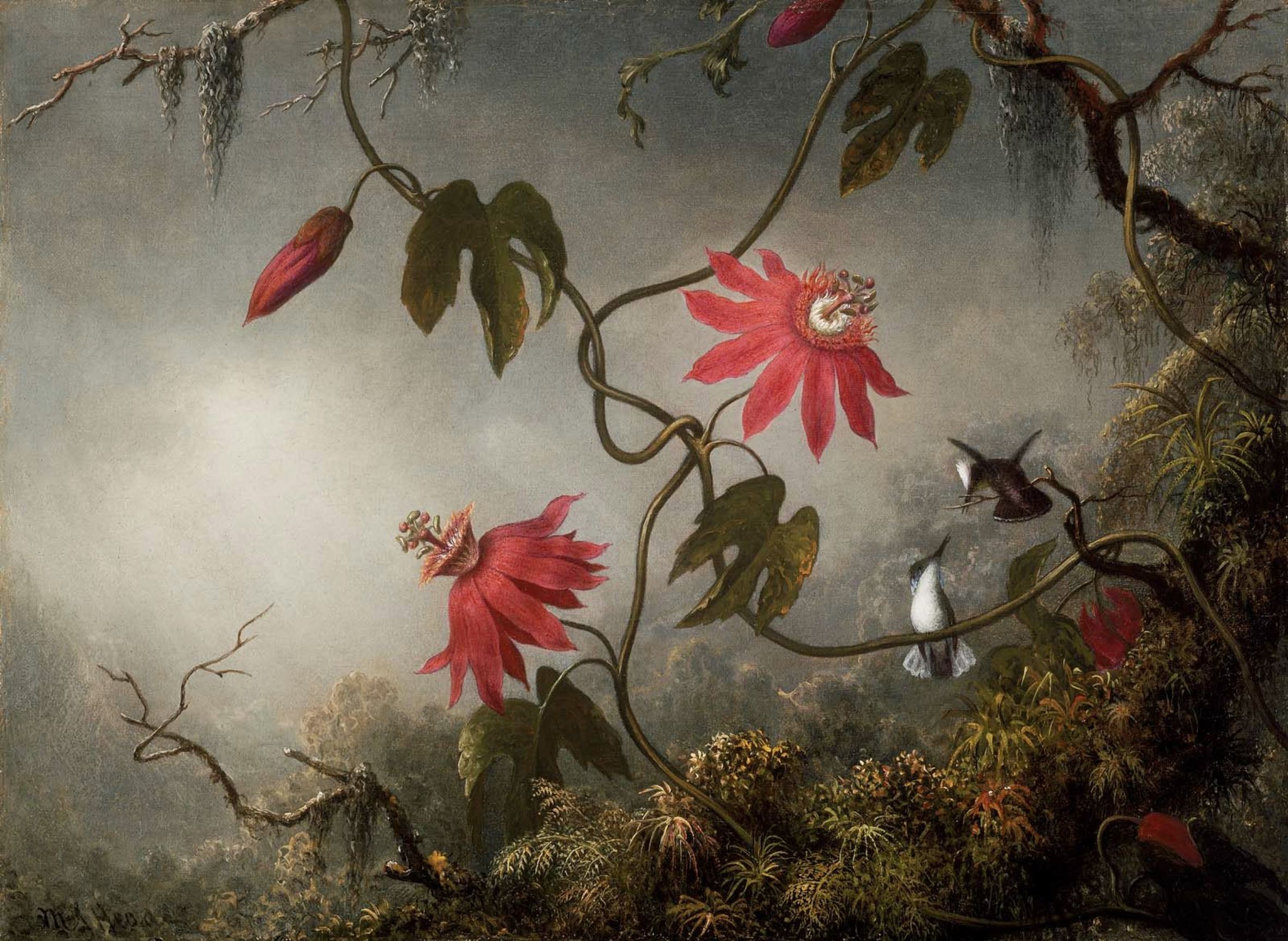
For centuries artists have been drawn to draw this exotic plant resulting in amazing pieces of work.
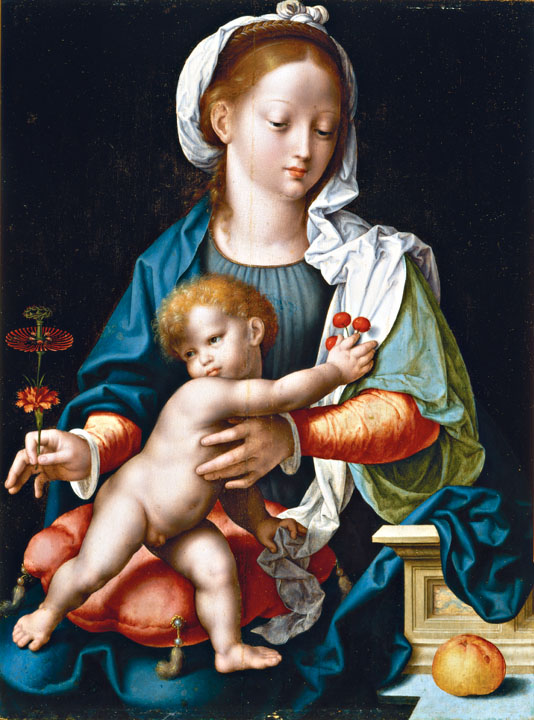

Maud "There has Fallen a splendid Tear From the Passion Flower at the Gate"

No comments:
Post a Comment